
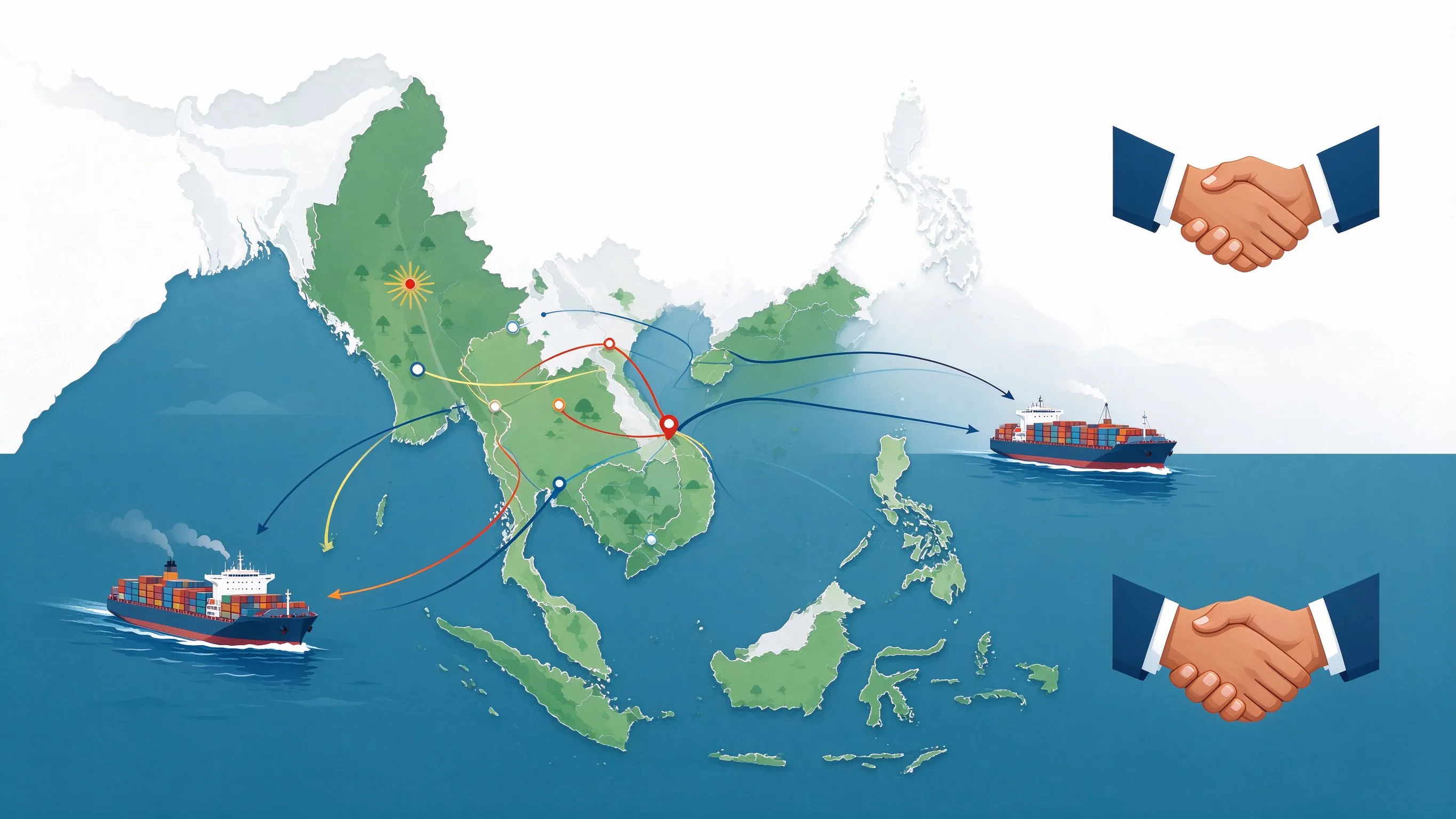
What RCEP has changed after five years
RCEP took effect in 2022 and is now in its fifth year. For export factories, it delivers real tariff reductions and market access—not just a concept.
RCEP covers 15 countries, 2.2 billion people, and ~30% of global GDP. Over 90% of goods trade will eventually reach zero tariffs, with new items dropping every year.
Three opportunities for Chinese factories
1. Industrial exports: lower tariff costs
Steel, machinery, electrical cables, hardware, and auto parts—China's strengths—see falling import tariffs in SEA. Steel in Indonesia and Vietnam dropped from 10–20% MFN to under 5% under RCEP, with some categories at zero.
Lower tariffs make your pricing more competitive vs Japanese, Korean, and European suppliers.
2. Supply chain shifts drive配套 demand
Chinese companies moving assembly to Vietnam, Thailand, and Indonesia bring upstream materials and equipment demand. Factories source machines, raw materials, and spare parts from China—a continuous demand pool.
3. SEA infrastructure boom: large project orders
Indonesia's new capital, Thailand's EEC, Vietnam rail, Philippines roads—SEA is in an infrastructure peak, driving steel, cement, machinery, fasteners, and cables. Chinese contractors often prefer Chinese suppliers.
How to use RCEP dividends
- Use RCEP certificates of origin—buyers get tariff preference; your quotes win. Apply through CCPIT or customs.
- Study target-country tariff schedules—know when your product reaches zero.
- Add SEA case content to your website.
- Attend SEA industrial trade shows—lower cost than Europe/US, precise buyers.
Risks
- Local SEA capacity is growing—differentiate with quality, customization, service
- Customs and certification rules vary widely—research before shipping
- FX volatility—quote in USD or RMB
FAQ
Q: How to get an RCEP certificate of origin?
A: Apply via China International Trade Single Window or CCPIT with product details, material sources, and production processes. First time, ask a freight forwarder for guidance.
Q: Can small factories enter SEA?
A: Yes. SEA buyers are price-sensitive; small factories are flexible and cost-effective. Start through trading companies or platforms, then go direct.
Q: Payment reputation of SEA buyers?
A: Varies. Use L/C or prepayment for new clients; extend terms only for established ones. Export credit insurance reduces risk at low premium.
Want to apply this to your business?
Talk with GOWM about your target market, products and current marketing setup.
Discuss Your Goals↗